
Glueless Wig Shopping Starts with the Cap, Not the Label
“Glueless” tells a shopper what may not be required; it does not guarantee security, comfort, or a natural hairline. The decision should begin with cap construction, measurements, pressure, movement, and the wearer’s daily removal routine. Fibre, density, and style matter after the base can be worn comfortably for the intended day.
Define what glueless means for the exact piece
The term may describe a wig designed to be worn without liquid adhesive, but the actual security system can involve adjustable straps, elastic bands, combs, clips, silicone, a grip band, or a close cap fit. Ask the fitter to identify every contact point and explain whether it is optional.
One wearer may want complete daily removal with no tape. Another may avoid glue but use a grip. Someone with fragile bio hair may need to avoid clips. A person with a sensitive or bare scalp may prioritize soft materials and pressure distribution. “No adhesive” is therefore the start of the fitting brief, not the whole brief.
Ask the seller to demonstrate the wig with every optional security component removed, then add only what the wearer needs. This reveals whether the base fit is doing the work or whether combs and bands are compensating for a poor size. Photograph the inside of the cap and label each feature so the routine can be repeated at home.
Security should not come from excess pressure
Measure the circumference, front to nape, ear to ear, temple to temple, and nape where the construction requires it. Check the manufacturer’s size method rather than assuming universal sizing. Hair underneath, protective styling, flattening method, and expected hair loss or regrowth can alter fit.
During the fitting, turn the head, look down, bend, walk, sit against a chair, and try glasses or hearing devices. The wig should not ride up, shift at the temples, or create pain. A strap tightened to the limit may hide an incorrect cap size for ten minutes and create a headache later.
Ask what happens if the wearer’s measurements change. Some caps allow minor adjustment; others may need alteration or replacement. If the wig is connected to medical hair loss, build in a review point as the scalp and bio hair change.
Hairline and parting depend on construction and preparation
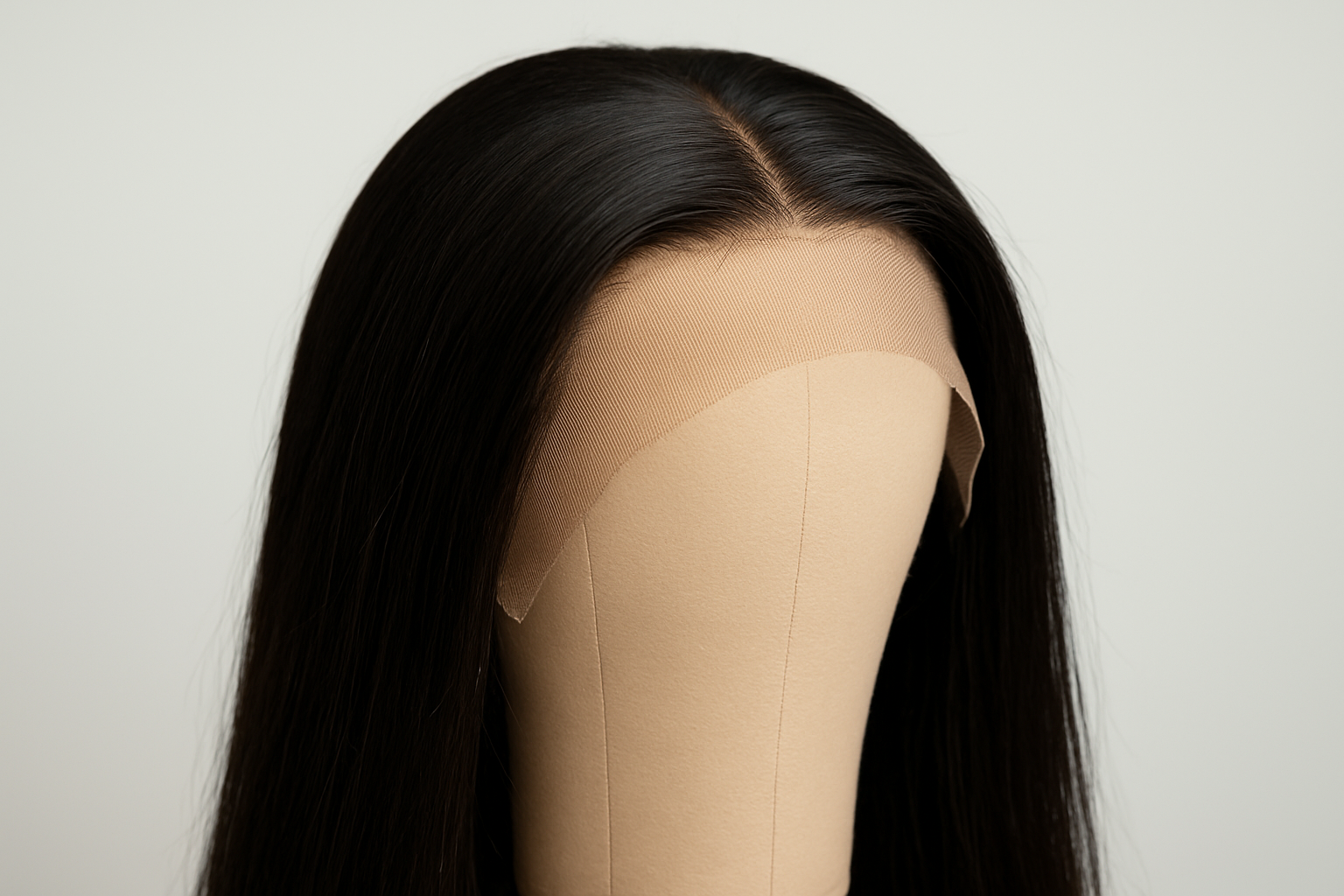
A lace front can create a fine transition, but lace type, colour, knotting, density, placement, and cutting all affect the result. Ask who cuts the lace, how much is left, and whether the work changes return rights. Do not assume that bleaching knots or adding makeup is safe for every base.
The Truly You human-hair wig collection describes lace-front and hand-tied monofilament construction in its range. Confirm which features appear on the exact wig and where. A monofilament crown, partial monofilament, and full hand-tied cap create different movement and parting options.
Prepare the hair underneath without painful tension. Thick braids, bulky pins, or uneven placement can change the cap fit and create ridges. On a bare scalp, material, seams, and grip become more noticeable. A liner may improve comfort for one person and add heat or movement for another, so it should be tested rather than assumed.
Fibre choice changes the morning routine
Human hair allows broad restyling but generally needs washing, drying, and weather management. Traditional synthetic fibre may hold its preset shape with less styling but comes with heat and friction limitations. Blended fibre can sit between the two, with care rules determined by the actual mix.
Truly You’s blended-hair wig information describes a combination of synthetic ease and natural-hair styling versatility. A shopper should still request the fibre percentage, permitted temperatures, chemical restrictions, and drying instructions for the selected model.
Choose density after testing heat and movement. A very full wig can feel less secure because of weight and can make the hairline harder to personalize. The right density should match the wearer’s face, style, cap construction, and comfort rather than a generic idea of luxury.
Discuss sweat and skin care. Oils, moisturizer, sunscreen, and perspiration can affect grip materials and the appearance of the hairline. Ask how the forehead and cap should be cleaned, which products damage lace or silicone, and how often liners and grips are washed. The instructions should protect both the scalp and the piece.
Run a daily-removal test before finalizing
Practise putting the wig on, aligning the front, securing each feature, checking the back, and removing it without pulling hair or lace. Time the routine. Repeat it with the mirror and tools available at home. If the process depends on a fitter’s hands every morning, it is not yet an independent glueless solution.
Inspect the scalp after several hours for pressure marks, redness, rubbing, or soreness. Note heat and sweat. Test the wig with a coat collar, car headrest, outdoor breeze, and typical movement. Security should be demonstrated during the wearer’s life, not by shaking a mannequin.
Plan for exceptions. Travel, illness, a rushed morning, or a sensitive-skin day may change what feels manageable. A scarf, hat, alternate wig, or no-wig option can be part of the wardrobe. A glueless purchase should increase flexibility rather than create a new rule that the wearer must perform perfectly every day.
Request care, alteration, and return policies before lace is cut or the hair is customized. Glueless does not mean maintenance-free. The strongest purchase is the cap that stays comfortable and predictable through repeated on-and-off wear; colour and length can only succeed after that foundation is right.