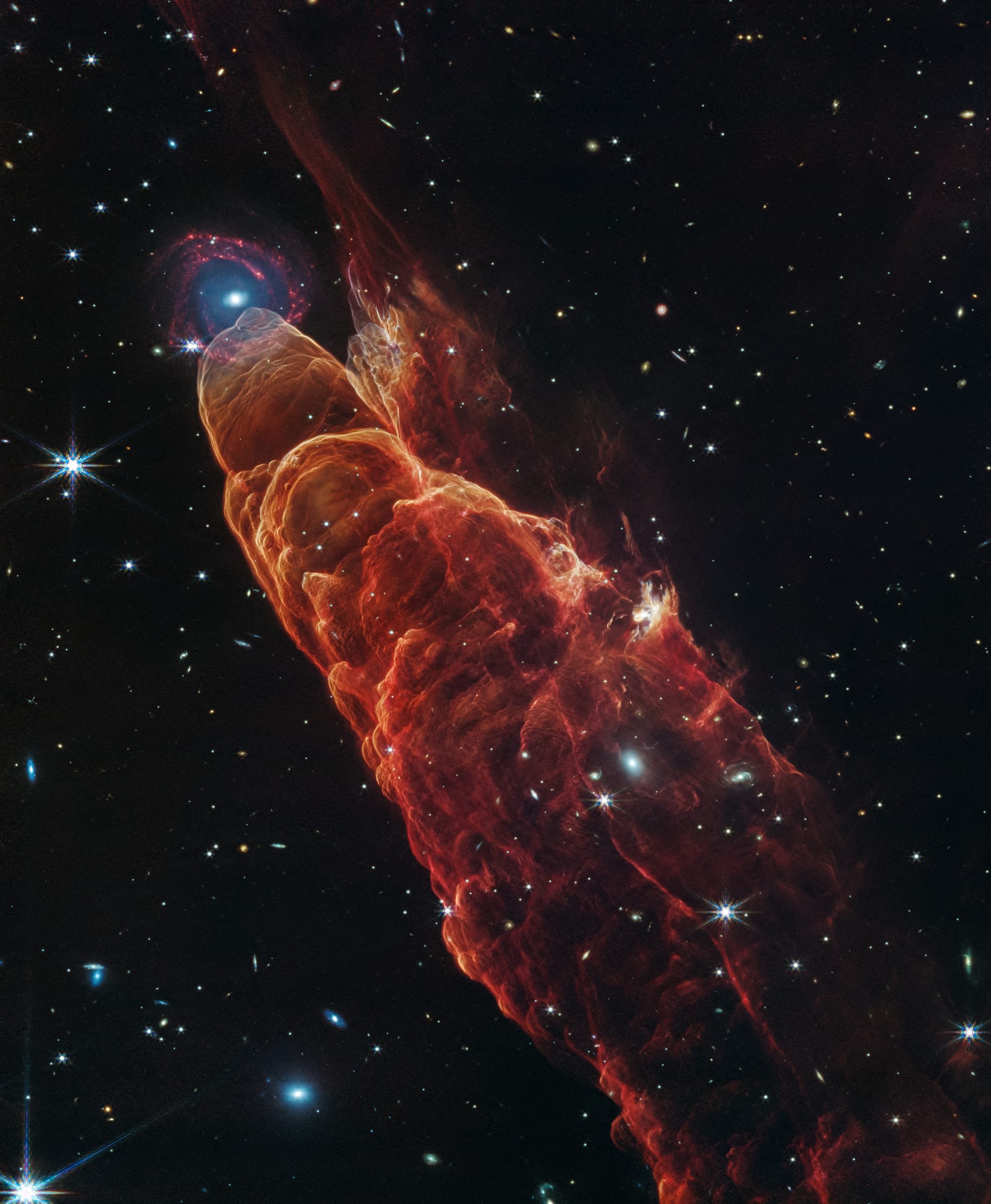
Jet diffusion wakes are crucial in understanding quark-gluon plasmas. After 20 years of research, new detections have shed light on this complex phenomenon.
Understanding Jet Diffusion Wakes
Jet diffusion wakes represent a significant phenomenon in the study of quark-gluon plasmas, providing insights into the behavior of matter under extreme conditions. Recent discoveries have confirmed their presence, shedding light on how jets interact with the surrounding medium.
Researchers have observed that when high-energy jets pass through quark-gluon plasmas, they create distinctive wake patterns. These patterns, or wakes, are influenced by various factors including the density and temperature of the plasma. Understanding these interactions is crucial for advancing our knowledge of fundamental physics.
Key findings regarding jet diffusion wakes include:
- Detection Techniques: Advanced experimental methods have made it possible to visualize jet diffusion wakes in real-time, offering unprecedented data.
- Energy Loss Mechanisms: Studies reveal that jets lose energy as they traverse the plasma, which is a critical aspect of understanding jet dynamics.
- Implications for Particle Physics: These findings have broad implications for theories about the early universe and the behavior of strong interactions.
As research continues, the exploration of jet diffusion wakes promises to enhance our comprehension of high-energy physics and the fundamental forces at play in the universe.
The Importance of Quark-Gluon Plasma Research
Research into jet diffusion wakes is crucial for understanding the fundamental properties of quark-gluon plasma, a state of matter believed to have existed shortly after the Big Bang. The study of these wakes provides valuable insights into the interactions and dynamics within this unique plasma.
Recent discoveries have highlighted the significance of jet diffusion wakes in revealing how energy and momentum are transferred in high-energy collisions. Key findings include:
- Enhanced particle production: Jet diffusion wakes can result in increased particle yields, which offer clues about the thermalization process within the plasma.
- Flow patterns: The study of jet diffusion wakes aids in understanding the collective behavior of particles, shedding light on how quark-gluon plasma behaves like a nearly perfect fluid.
- Temperature measurements: Researchers have found that analyzing these wakes allows for precise temperature estimates of the quark-gluon plasma, critical for validating theoretical models.
As scientists continue to explore jet diffusion wakes, their findings are expected to deepen our understanding of the early universe and the fundamental forces that govern matter.
Historical Context of Jet Diffusion Studies
The study of jet diffusion wakes has evolved significantly over the past two decades, particularly in the context of high-energy nuclear physics. Initial investigations into these phenomena began as researchers sought to understand the behavior of particles in extreme conditions, specifically during high-energy collisions in particle accelerators. As scientists delved deeper, they discovered that jet diffusion wakes could provide crucial insights into the properties of quark-gluon plasma, a state of matter thought to have existed shortly after the Big Bang.
Throughout the years, various experiments, notably at the Large Hadron Collider (LHC) and the Relativistic Heavy Ion Collider (RHIC), have contributed to the understanding of jet diffusion wakes. These large-scale collaborations aimed to recreate the conditions necessary for observing quark-gluon plasma, leading to groundbreaking discoveries.
Researchers have identified key characteristics of jet diffusion wakes, including their formation and evolution, which are influenced by the thermal properties of the surrounding medium. This historical context underscores the importance of ongoing studies, as each finding enhances our comprehension of fundamental physics and the universe’s early moments.
Recent Discoveries in Particle Physics
Recent advancements in particle physics have shed light on the phenomenon of jet diffusion wakes, revealing critical insights into quark-gluon plasma behavior. Researchers have made significant strides in understanding how these wakes are formed and their implications for high-energy collisions.
One of the most notable discoveries was the detection of jet diffusion wakes in quark-gluon plasmas after two decades of extensive research. This landmark achievement was made possible through enhanced detection methods and improved collider technology, allowing scientists to observe the intricate interactions within the plasma.
Recent experiments at facilities such as the Large Hadron Collider (LHC) have provided valuable data, leading to a deeper comprehension of the dynamics involved. The findings indicate that:
- Jet diffusion wakes can influence particle production rates.
- These wakes are essential in understanding energy loss mechanisms in quark-gluon plasma.
- They play a crucial role in the study of how matter behaves under extreme conditions.
As researchers continue to explore the complexities of jet diffusion wakes, the implications of these discoveries could redefine our understanding of fundamental particles and the forces that govern their interactions.
Implications for Future Research
The recent discoveries surrounding jet diffusion wakes have significant implications for future research in particle physics and high-energy collisions. As scientists continue to unravel the complexities of quark-gluon plasma, understanding the behavior of jet diffusion wakes becomes increasingly critical.
One major area of future inquiry lies in the precise mechanisms that govern the interaction between jets and the surrounding medium. Researchers are poised to explore how varying conditions, such as temperature and density, affect the properties of jet diffusion wakes. This could lead to a deeper understanding of the fundamental forces at play in the early universe.
Furthermore, advancements in experimental techniques will allow for more detailed observations of jet diffusion wakes in different contexts. Potential applications may extend beyond particle physics, influencing fields such as astrophysics and cosmology. The insights gained could illuminate the processes that occurred shortly after the Big Bang, offering a glimpse into the universe’s infancy.
In summary, the detection of jet diffusion wakes represents a pivotal step in research, with promising avenues for future exploration that may transform our understanding of matter and the fundamental laws governing the universe.
Expert Opinions on Jet Diffusion Wakes
Experts in the field of particle physics are increasingly recognizing the significance of jet diffusion wakes in understanding the behavior of quark-gluon plasmas. Dr. Emily Chen, a physicist at the Large Hadron Collider, stated, “The detection of jet diffusion wakes provides us with invaluable insights into the properties of these extreme states of matter.”
Furthermore, Dr. Raj Patel, a leading researcher at a prominent university, emphasized the implications of these findings. “Studying jet diffusion wakes not only enhances our comprehension of the early universe but also fosters advancements in theoretical models,” he explained.
Many scientists agree that the observation of these wakes is a turning point in the field. Dr. Sarah Lopez remarked, “After two decades of research, we are finally seeing the tangible effects of jet diffusion wakes, which were previously only hypothesized.”
As the community continues to delve into this phenomenon, the consensus is clear: the implications of jet diffusion wakes extend beyond mere observation, promising to reshape our understanding of fundamental physics.
As research progresses, the collaboration among institutions worldwide is expected to accelerate discoveries related to jet diffusion wakes and their role in the universe.
Methodologies Used in Detection
The detection of jet diffusion wakes has evolved through various sophisticated methodologies, reflecting advancements in particle physics research. Researchers have employed a combination of experimental and theoretical approaches to accurately identify and analyze these phenomena.
Prominent methodologies include:
- High-energy collision experiments: Particle accelerators, like the Large Hadron Collider, facilitate collisions at unprecedented energy levels, creating conditions similar to those just after the Big Bang. These collisions are pivotal for observing jet diffusion wakes in quark-gluon plasma.
- Data analysis techniques: Advanced algorithms and statistical methods are utilized to parse vast amounts of collision data, enabling scientists to isolate and identify the signatures of jet diffusion wakes.
- Computational modeling: Simulations play a crucial role in predicting the behavior of jet diffusion in quark-gluon plasma, allowing researchers to compare theoretical predictions with experimental results.
Each of these methodologies has contributed significantly to the understanding of jet diffusion wakes, providing a clearer picture of their role in the dynamics of quark-gluon plasma and opening avenues for further exploration in particle physics.
Challenges in Quark-Gluon Plasma Studies
The study of quark-gluon plasma (QGP) presents numerous challenges, particularly in relation to jet diffusion wakes. Understanding these wakes is crucial for gaining insights into the behavior of matter at extreme temperatures and densities.
One significant challenge lies in the detection methods used to observe jet diffusion wakes in high-energy collisions. The complex interactions within QGP create a dense environment where jets can scatter and lose energy, making it difficult for researchers to distinguish between signal and background noise.
Moreover, the theoretical models that describe jet diffusion are still evolving. Researchers must resolve discrepancies between predictions and experimental results, which can impact the accuracy of their findings. Key challenges include:
- Energy loss mechanisms: Understanding how jets lose energy in QGP is essential for interpreting results.
- Event characterization: Accurately categorizing collision events is crucial for isolating jet diffusion wakes.
- Data analysis techniques: Developing sophisticated analysis methods to interpret the massive datasets generated in experiments is a priority.
Despite these challenges, recent advancements in technology and methodology offer hope for overcoming these hurdles, paving the way for deeper understanding of jet diffusion wakes and their implications in particle physics.
By CREDIT NASA, ESA, CSA, STScI LICENCE CC BY 4.0 INT or ESA Standard Licence (content can be used under either licence) via Openverse
References
OpenAI AI model: Worst Decision Over Trust Issues · OpenAI Always-On Agent: The Best Smart Feature for Users · Galaxy SmartTag support: Is it the worst news for users?